
浏览数量: 98 作者: jiuqing 发布时间: 12-08-2025 来源: yadigarment

Content Menu
● Key Differences Between Jackets and Coats
>> Length
>> Material
>> Overcoats
>> Trench Coats
>> Peacoats
● Choosing the Right Outerwear
>> Think About Your Activities
>> 1. Can I wear a jacket in winter?
>> 2. Are coats always warmer than jackets?
>> 3. Can I wear a coat casually?
When it comes to outerwear, the terms "jacket" and "coat" are often used interchangeably, but they refer to distinct types of clothing. Understanding the differences between these two garments can help you make better choices for your wardrobe, especially when considering factors like style, function, and weather conditions. In this article, we will explore the key differences between jackets and coats, their various styles, materials, and purposes, and provide insights into how to choose the right one for your needs.
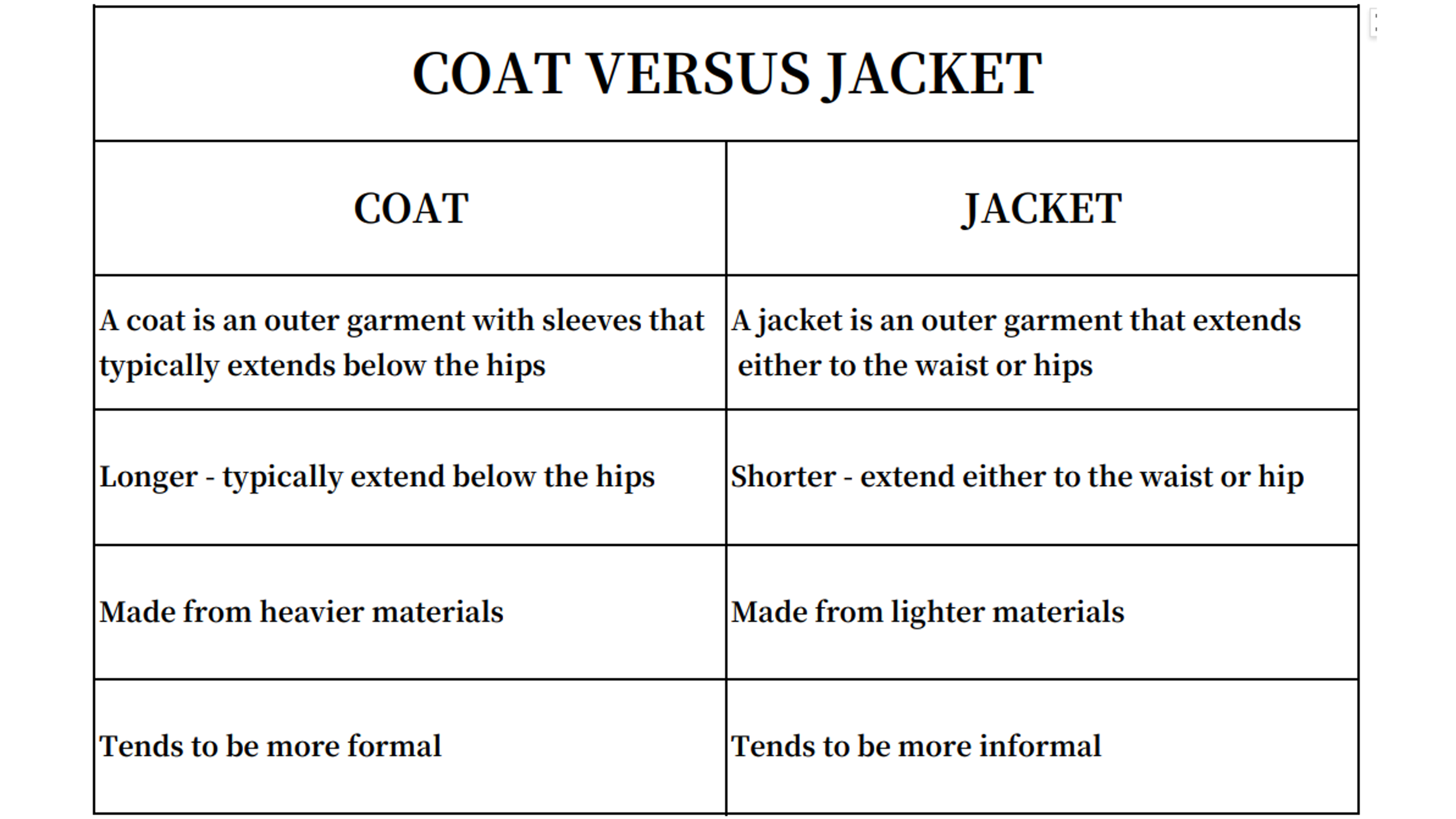
A jacket is typically a shorter outerwear garment that is designed to be worn over other clothing. Jackets can vary in style, material, and purpose, but they generally end at the waist or hip. They are often made from lighter materials, making them suitable for milder weather or as a fashion statement. Jackets can be casual or formal, and they come in various styles, including denim jackets, leather jackets, blazers, and bombers.
In contrast, a coat is a longer outerwear garment that provides more coverage and warmth. Coats usually extend below the waist, often reaching the knees or even longer. They are typically made from heavier materials, such as wool, down, or heavy cotton, which makes them ideal for colder weather. Coats are designed to protect against the elements and are often worn as a primary outer layer during winter or inclement weather.
One of the most significant differences between jackets and coats is their length. Jackets are generally shorter, ending at the waist or hip, while coats are longer, often reaching the knees or lower. This length difference affects not only the style but also the level of warmth and protection each garment provides.
The materials used in jackets and coats also differ. Jackets are often made from lighter fabrics such as cotton, polyester, or denim, making them suitable for transitional weather. Coats, on the other hand, are typically constructed from heavier materials like wool, down, or leather, which provide better insulation and protection against cold temperatures.
Jackets are versatile and can be worn in various settings, from casual outings to formal events. They are often designed for style and comfort, allowing for ease of movement. Coats, however, are primarily functional, designed to keep you warm and protected from harsh weather conditions. They often feature additional elements such as insulation, windproofing, and waterproofing.
Casual jackets include denim jackets, bomber jackets, and field jackets. These styles are typically made from lighter materials and are perfect for everyday wear. They can be paired with jeans, skirts, or shorts for a relaxed look.
Formal jackets, such as blazers and suit jackets, are designed for business or formal occasions. They are usually tailored for a fitted look and can be made from materials like wool or polyester blends. These jackets are often worn over dress shirts and paired with trousers or skirts.
Sports jackets are designed for outdoor activities and are often made from technical fabrics that offer breathability and moisture-wicking properties. They may include features like pockets for storage and adjustable cuffs for a better fit.
Overcoats are long, heavy coats designed to be worn over suits or formal attire. They are typically made from wool or cashmere and provide excellent insulation for cold weather.
Trench coats are a classic style that features a double-breasted front, a belted waist, and often a waterproof fabric. They are versatile and can be worn in both casual and formal settings.
Peacoats are shorter, double-breasted coats made from heavy wool. They are traditionally associated with naval uniforms and provide warmth and style for colder months.
When choosing between a jacket and a coat, consider the weather conditions. For mild temperatures, a jacket may suffice, while colder climates will require a coat for adequate warmth.
Consider your daily activities when selecting outerwear. If you need something for outdoor sports or casual outings, a jacket may be more appropriate. For formal events or harsh weather, a coat is the better choice.
Your personal style should also influence your choice. Jackets offer more variety in terms of fashion, while coats tend to be more classic and functional. Choose the one that best fits your wardrobe and lifestyle.
Yes, you can wear a jacket in winter, but it should be a heavier style, such as a puffer jacket or a wool blend, to provide adequate warmth.
Generally, yes. Coats are designed to be longer and made from heavier materials, providing better insulation and protection against cold weather.
Absolutely! Many coats, such as trench coats and peacoats, can be styled casually with jeans and boots for a chic look.
In summary, while jackets and coats serve similar purposes as outerwear, they are distinct in terms of length, material, and functionality. Jackets are shorter and often lighter, making them suitable for milder weather and casual settings. Coats, on the other hand, are longer and heavier, designed to provide warmth and protection in colder conditions. Understanding these differences can help you make informed choices when selecting outerwear for various occasions.


